
Roof Leaking During Rain
Active leaks during rain usually mean water is finding a path through shingles, tile underlayment, flashing, vents, or roof valleys.
Roofing Help
Roof leaks, missing shingles, flashing damage, water stains, sagging roof sections, skylight leaks, wind damage, and flat roof ponding water in Santa Maria.
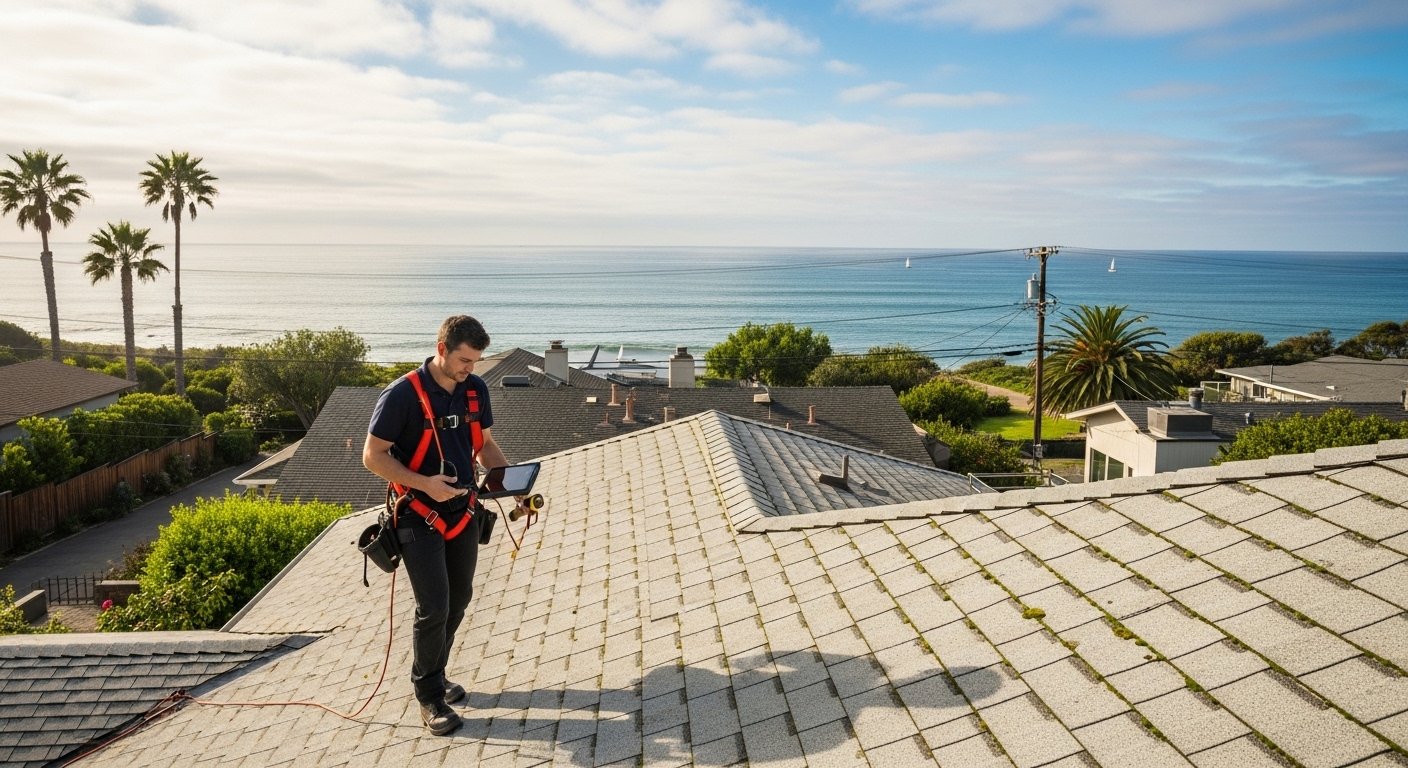
Choose the page that best matches what you need. Each page explains what to watch for, how the work is handled, what can affect cost, and when it makes sense to act quickly.
Active leaks during rain usually mean water is finding a path through shingles, tile underlayment, flashing, vents, or roof valleys.
Ceiling stains often start as small roof leaks and can grow into drywall damage, insulation trouble, and mold concerns.
Missing or lifted shingles leave the roof deck exposed to wind-driven rain and can cause leaks that travel far from the damaged area.
Sagging areas may point to trapped moisture, damaged decking, poor ventilation, or structural stress that deserves prompt attention.
Damaged flashing around chimneys, walls, vents, and skylights is one of the most common sources of stubborn leaks.
Central Coast winds can loosen shingles, shift tiles, expose fasteners, and open gaps that worsen during the next storm.
Skylight leaks are often caused by flashing failure, seal breakdown, cracked roof materials, or poor water flow around the opening.
Standing water on a flat roof can strain seams, speed up membrane wear, and send moisture into weak roof penetrations.
Tell us what you are seeing and we can point you toward the right roofing service.